


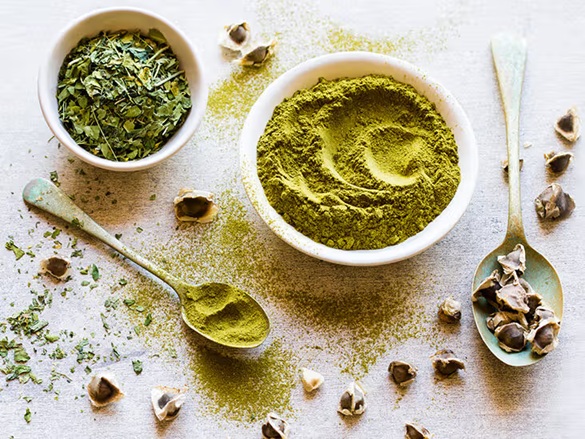
“Moringa benefits for women“ are rooted in its high nutritional density. It is exceptionally rich in iron, making it a powerful ally against anemia—a common concern for menstruating women. It also contains significant calcium for bone health and has shown promise in supporting hormonal balance for those with PCOS. In 2026, more women are using moringa as a natural “multivitamin” due to its ability to stabilize blood sugar and provide a non-jittery energy boost.
It’s not a miracle supplement – but it’s earned its place. Here’s what the evidence says, broken down by what matters most for women’s health.
Moringa’s Nutritional Profile (Why It Stands Out)
|
Nutrient |
Amount per 100g powder |
Why It Matters for Women |
|---|---|---|
|
Iron |
28 mg (high) |
Replaces iron lost through menstruation; anaemia prevention |
|
Calcium |
2,003 mg |
Bone density support, especially post-menopause |
|
Vitamin C |
51 mg |
Enhances iron absorption; immune support; skin collagen |
|
Protein |
27 g (all essential amino acids) |
Muscle maintenance, satiety, hair and nail health |
|
Magnesium |
368 mg |
PMS relief, sleep, muscle cramps |
|
Vitamin A |
High (beta-carotene) |
Skin health, reproductive health, immune function |
|
Antioxidants (quercetin, chlorogenic acid) |
Very high |
Anti-inflammatory, hormonal balance |
Key Benefits for Women
Iron Support and Anaemia Prevention
Iron deficiency anaemia disproportionately affects women – particularly those with heavy periods. Moringa contains more iron per gram than spinach, and combined with its vitamin C content (which dramatically enhances non-haem iron absorption), it’s one of the better plant-based iron sources available. Women who struggle to get enough iron through diet – whether for dietary, economic, or health reasons – may find moringa genuinely useful here.
Hormonal Balance and PMS Relief
Moringa’s magnesium content is significant for PMS – magnesium deficiency is associated with worse period pain, mood swings, and bloating. Its antioxidant and anti-inflammatory compounds may also support oestrogen metabolism. A few small studies have looked at moringa’s effect on menopausal symptoms, with early positive findings – though more research is needed.
Bone Health
Women lose bone density significantly after menopause as oestrogen drops. Moringa’s calcium content is remarkably high – higher than milk gram for gram – and it also contains phosphorus and magnesium, which support calcium absorption. This makes it a useful dietary addition for women building bone reserves in their 30s and 40s, or maintaining them after 50.
Breastfeeding Support
In several cultures, moringa has traditionally been used to support breast milk production – and there is emerging clinical evidence to support this. A few randomised trials in the Philippines and elsewhere found that postpartum women taking moringa leaf capsules produced significantly more breast milk in the first weeks. The mechanism isn’t fully understood, but it may relate to moringa’s galactagogue properties.
Skin and Hair
Moringa oil (from the seeds) is used topically and is well-regarded for skin moisturising and anti-ageing properties. Internally, the combination of vitamin A, vitamin C, and amino acids supports collagen production, skin elasticity, and hair follicle health. It’s not a substitute for a balanced diet, but it adds meaningful nutritional support.
Blood Sugar and PCOS
Chlorogenic acid in moringa has been shown to help regulate post-meal blood glucose spikes. For women with PCOS – where insulin resistance is a common feature – this is particularly relevant. Several small studies have found moringa reduces fasting blood sugar and improves insulin sensitivity. It’s a supportive tool, not a standalone treatment.
How to Take Moringa
- Powder: most common form – mix 1 teaspoon into smoothies, juices, soups, or yoghurt (start with half a teaspoon – it has a distinctive, earthy taste)
- Capsules: convenient, tasteless – typically 400-500mg per capsule, 1-2 per day
- Tea: dried leaves steeped – lower concentration than powder but pleasant and easy
- Fresh leaves: if available, can be cooked like spinach or added to curries
Dosage and Safety
- General supplementation: 2-3g of powder or 400-800mg in capsule form daily
- Pregnancy caution: the root, bark, and flowers of moringa contain compounds (alkaloids) that may stimulate uterine contractions – avoid during pregnancy. The leaves in small culinary amounts are generally considered safer, but always check with your OB/GYN
- Breastfeeding: moringa leaf is considered safe for breastfeeding and may be beneficial
- Thyroid conditions: moringa may interact with thyroid medication – space doses apart and consult your doctor
- Blood thinners: consult your doctor before use
Moringa won’t fix hormonal imbalances or replace medical treatment. But as a nutritional supplement with a solid profile of nutrients particularly relevant to women’s health, it’s one of the more evidence-backed herbal options available – especially for iron, bone health, and blood sugar support.
