


Due to the risk of an allergic response, you cannot have a skin test while pregnant. However, in most circumstances, blood testing while pregnant is possible. This San Antonio allergy testing is less precise than skin testing and can identify foods and other things to which you may be allergic. It might also give you an estimate of the severity of possible responses.
Medicines you can take for allergies during pregnancy
Women should use extreme caution while using drugs during pregnancy, especially during the first trimester. Before using allergy medication while pregnant, see your doctor. Collaborate to find a suitable medication or symptom control balance. Your doctor may initially suggest non-medication methods for symptom relief. Strategies include allergy-proofing your house, avoiding allergy triggers, and utilizing a saline (saltwater) nasal spray, nasal strips, or nasal irrigation.
- Antihistamines taken orally treat the nasal and ocular allergy symptoms of allergic rhinitis. You should take them after the first trimester.
- Loratadine and cetirizine are antihistamines of the second generation. According to many studies, they are safe to use throughout pregnancy. Unlike first-generation oral antihistamines (chlorpheniramine, diphenhydramine, tripelennamine), they do not produce drowsiness.
Alternative therapies
Alternative treatments include:
- Avoid allergens: When seasonal allergies are at their highest, stay indoors with the windows closed.
- Using a humidifier: Dry, inflamed nasal passages might benefit from moist air.
- Operating an air purifier: Using a high-quality air purifier at home or work can help to minimize allergies and toxins in the air.
- Thorough cleaning: Regular cleaning of the home will eliminate dust, dander, and pollen from their hiding spots. Pay attention to the bedding.
Can allergies during pregnancy harm your baby?
An allergy during pregnancy can be quite uncomfortable, but it is usually just that. Your infant is completely safe unless you have a serious allergic response. You can lessen or even eliminate your symptoms by using the proper medicine and being cautious around allergens. It is also especially crucial for those with more severe allergic response symptoms.
Allergies vs. nasal congestion while pregnancy
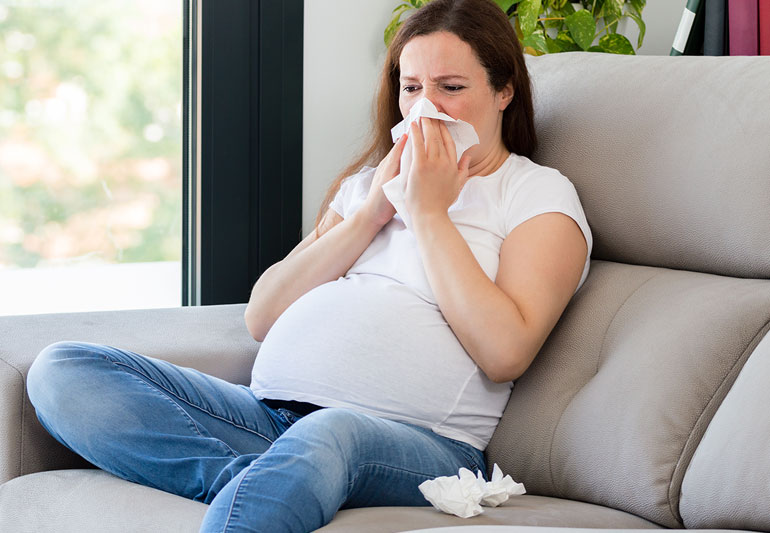
Expectant noses are, however, stuffy noses. Nasal congestion commonly begins in the second trimester, when high levels of estrogen and progesterone boost blood flow throughout your body, including your nose, causing mucus membranes to enlarge and soften. This can make you feel as clogged up as if you had an allergy or a cold, leading to nosebleeds during pregnancy and postnasal drip, which may cause you to cough at night. If you have allergies, you will most likely have other symptoms (sneezing, itchy eyes, etc.) in addition to the stuffiness and coughing. It might be pregnancy-related congestion if you don’t have significant irritation or sneezing. If you are unsure, consult your doctor.
If you have allergies while pregnant, don’t put up with them—see your doctor. They should be able to point you on the appropriate path so you can get relief. Call Castle Hills Family Practice or book your consultation online to determine which allergy testing procedures work best for you and your unborn baby.
